Specialist consultancy CITAC has highlighted the urgent infrastructure needs in Africa’s midstream and downstream sectors as a key opportunity to boost investment, planning, and logistics across the industry, while also meeting the continent’s growing energy demand.
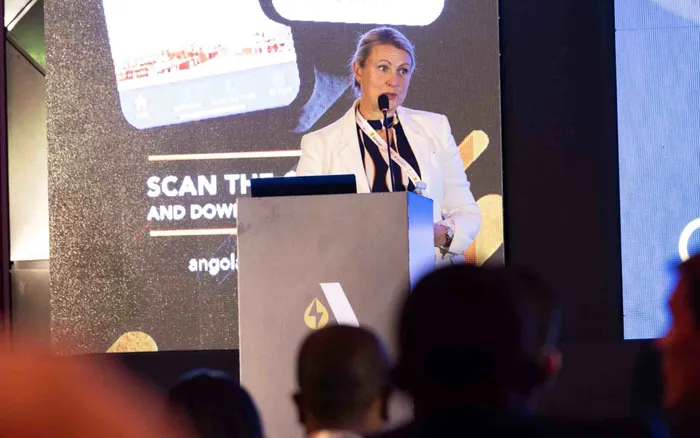
Ahead of AOG 2025, Elitsa Georgieva, Executive Director of CITAC, emphasized that oil demand in Africa has doubled since 2000, reaching 201 million tonnes – equivalent to 4.4 million barrels per day – in 2023, representing an annual growth rate of 2.2%.
According to Georgieva, who spoke at the CITAC-sponsored session “Midstream and Downstream Infrastructure Needs and Developments in Sub-Saharan Africa,” North Africa saw the most significant growth at 5.8%, reaching 86.8 million tonnes, driven primarily by demand for jet fuel and fuel oil.
Despite this expansion, output from African refineries has fallen by over 25% in the last decade, with refineries in West and Central Africa meeting only 15% of local demand. This imbalance between production and consumption reinforces dependence on imports and exposes supply chains to increased risk.
The executive also pointed to systemic challenges, including ports with shallow drafts, congested terminals, limited tank storage capacity, and constrained pipeline networks already operating at maximum capacity. Currently, 83% of petroleum products are transported by road, causing delays, high transport costs, and vulnerability with single points of failure in the supply chain.
“The most critical factors for the future are planning, logistics, and investment in infrastructure. This is what will drive product demand,” stated Georgieva, adding: “We have identified three key drivers: economic growth, population growth and urbanization patterns, and the energy transition.”
She concluded her presentation by stressing that with demand accelerating and refining capacity lagging, investment opportunities in storage facilities, pipelines, terminals, and modern refineries are multiplying.